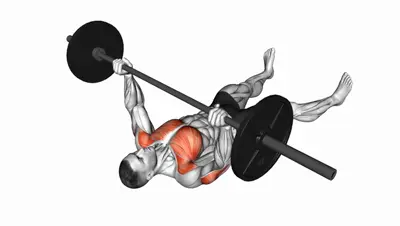
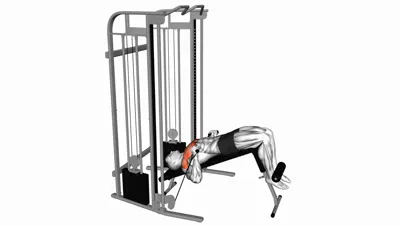
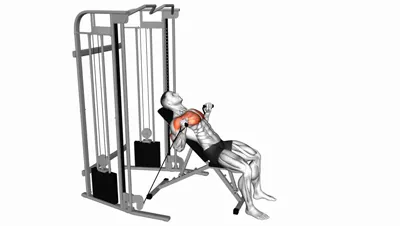
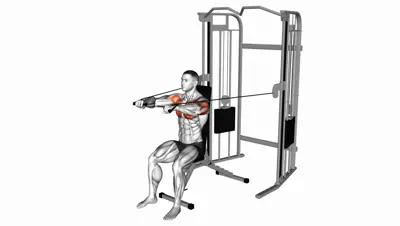
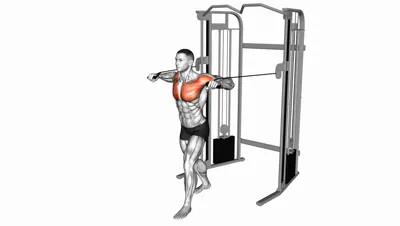
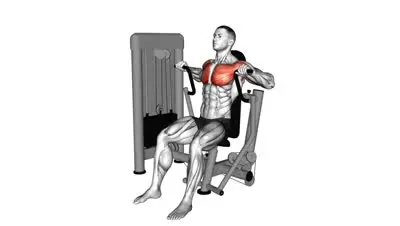
Description
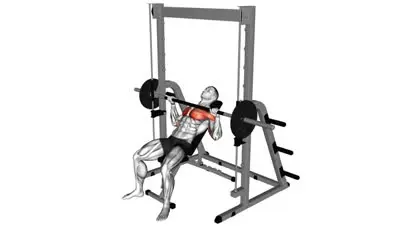
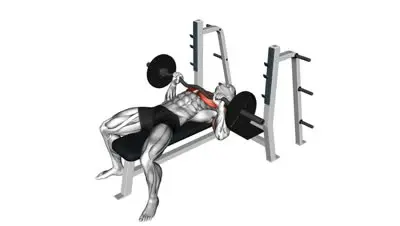
The barbell incline bench press builds the chest at a 15 to 30 degree upward angle, shifting a greater share of the load onto the upper, clavicular portion of the pectorals compared to a flat bench press while still training the front delts and triceps as secondary movers. Because a barbell lets you load both sides symmetrically and lift heavier absolute weight than dumbbells, it's a primary strength-building movement for upper-chest mass, filling the gap that flat pressing alone often leaves underdeveloped. It's one of the most direct tools available for building the fuller, rounder upper-chest shape that flat bench pressing rarely produces on its own.
How to perform
- Set the bench angle correctly Set the incline bench to 15–30 degrees — steeper angles shift more work to the front delts, so a moderate angle keeps the emphasis on the upper chest.
- Set your grip and unrack the bar Lie back with your eyes under the bar, take a grip roughly 1.5 times shoulder width, and unrack the bar over your upper chest with straight arms.
- Set your shoulder blades and feet Pull your shoulder blades down and together against the bench, plant your feet flat on the floor, and take a full breath into your belly.
- Lower the bar to your upper chest Lower the bar under control to touch just below your collarbone, letting your elbows travel at roughly a 45–60 degree angle from your torso.
- Press back up along a slight arc Drive the bar back up and slightly back toward the rack path, pushing through your whole hand and keeping your shoulder blades pinned.
- Lock out and reset Extend your arms fully at the top without shrugging your shoulders forward, then reset your breath before starting the next rep.
Tips
- Keep the bench angle moderate rather than steep — past 30–45 degrees the movement starts to resemble a shoulder press more than a chest press.
- Touch the bar to the same spot just below your collarbone on every rep — an inconsistent touch point changes the muscle emphasis rep to rep.
- Keep your elbows at roughly a 45–60 degree angle from your torso rather than flared to 90 degrees, which protects the shoulder joint under heavy load.
- Drive your feet into the floor and keep your shoulder blades pinned to the bench throughout the lift for a stable base to press from.
Common mistakes
- Setting the bench too steep — anything past 45 degrees shifts most of the work to the front delts and undermines the upper-chest emphasis you're aiming for.
- Flaring the elbows out to 90 degrees from the torso — this puts unnecessary stress on the shoulder joint and reduces mechanical advantage on the press.
- Bouncing the bar off the chest — using momentum instead of controlled tension skips the stretched-position loading that drives chest hypertrophy.
- Letting the hips lift off the bench to press more weight — this reduces the range of motion and shifts stress toward the lower back; keep your glutes down.
Recommended sets & reps
| Sets | Reps | RIR | |
|---|---|---|---|
| Strength | 3–5 | 3–6 | 1–2 |
| Hypertrophy | 2–3 | 8–12 | 1–2 |
| Endurance | 2–3 | 12–15 | 2–3 |
| Power | 3–5 | 1–3 | 1–2 |
These ranges are working sets only — add 1–2 progressive warm-up sets before each working set. Pair with 2× per week frequency to reach ~10–20 weekly sets per muscle group, the volume range supported by current evidence (Schoenfeld 2017, Pelland 2025).
Benefits
Builds the upper, clavicular portion of the chest more directly than flat pressing, filling in the fuller, rounder upper-chest development that many lifters find missing from a flat-bench-only routine. Trains the front deltoids and triceps as secondary movers, adding useful pressing strength that carries over to overhead pressing and flat bench work alike. Allows heavier absolute loading than dumbbell incline pressing because the barbell distributes weight symmetrically and offers a more stable bar path, making it a strong primary strength-building lift as well as a hypertrophy tool. A staple for any complete chest-training program that wants balanced development across the entire pectoral muscle.
Frequently asked questions
What angle should the incline bench be set to?
15 to 30 degrees is the sweet spot for maximizing upper-chest involvement while still keeping it primarily a chest exercise. Past 45 degrees, the movement starts recruiting the shoulders more than the chest.
Barbell incline press vs dumbbell incline press — which is better for upper chest?
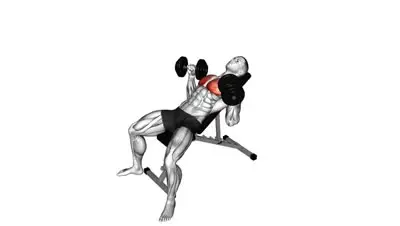
Both work the upper chest similarly well. The barbell allows heavier loading and a more stable bar path; dumbbells allow a slightly deeper stretch and independent arm work. Many lifters rotate between both across a training block.
Why does my shoulder hurt more on incline press than flat bench?
The incline angle increases shoulder flexion and can aggravate the joint if your elbows flare too wide or the bench is set too steep. Try a slightly lower angle and keep your elbows closer to a 45–60 degree angle from your torso.
Should incline press come before or after flat bench in a workout?
If upper-chest development is a priority, train incline press first while you're fresh so you can lift heavier and focus fully on technique before fatigue sets in from other pressing.
Educational guidance only — not a substitute for in-person coaching. Train within your ability and use a spotter for heavy attempts.