Description
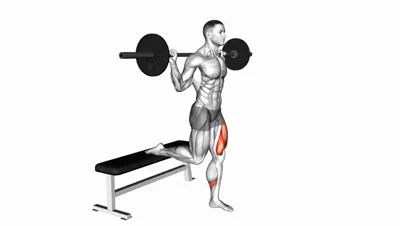
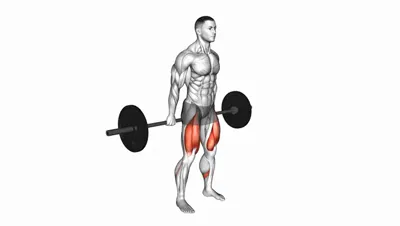
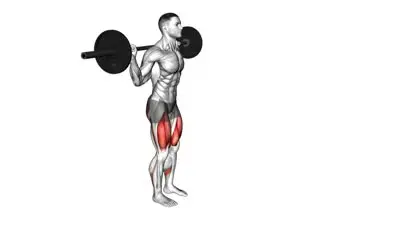
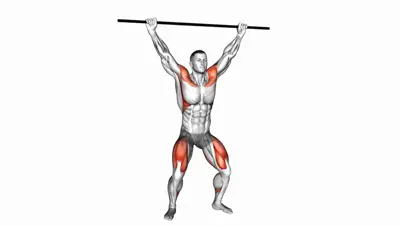
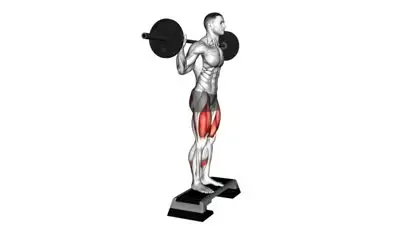
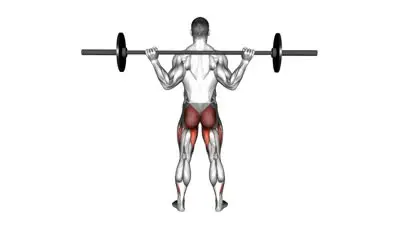
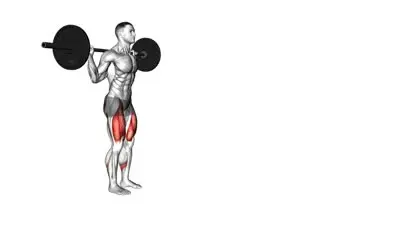
The barbell front squat loads the quads through a deep knee-flexion squat with the bar racked across the front of the shoulders. The front-loaded position forces a more upright torso than the back squat, shifting emphasis onto the quads and demanding tremendous bracing from the upper back and core to keep the chest from collapsing. It is a staple of Olympic weightlifting and a favorite quad-builder among physique athletes, because the upright posture and deep range hammer the quads while sparing the lower back relative to heavy back squats. Done well, it builds quads, core strength and posture together.
How to perform
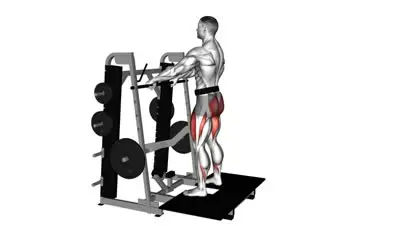
- Rack the bar on your delts Set the bar at upper-chest height. Step under it and rest it across the front of your shoulders, fingertips under the bar with high elbows — or cross your arms in a clean-grip alternative.
- Raise your elbows high Drive your elbows up so your upper arms are roughly parallel to the floor. High elbows keep the bar shelved on the shoulders and the torso upright. Unrack and step back.
- Set your stance and brace Set your feet about shoulder-width with toes turned slightly out. Take a deep belly breath into a braced core and keep your chest tall and elbows high.
- Descend between your knees Break at the hips and knees together and sit straight down, keeping the torso as upright as possible. Let your knees travel forward over your toes and track in line with them.
- Hit depth with a tall chest Descend until your hip crease is at or below the top of your knees, keeping the elbows high and the back flat. A collapsing chest is the cue to brace harder or reduce load.
- Drive up staying upright Drive through the whole foot and stand up by extending the hips and knees together, keeping the elbows up. Lock out tall and re-brace before the next rep.
Tips
- Keep your elbows pointed forward and high the entire set — the instant they drop, the bar rolls forward and the chest caves.
- If your wrists or shoulders can't hold the clean grip, use a cross-arm grip or loop lifting straps around the bar — mobility shouldn't cap your quad training.
- Stay upright by bracing the core hard and thinking 'chest up' — the front squat punishes a forward lean more than any other squat.
- Use a slightly narrower stance than your back squat and let the knees travel forward — this is what makes the front squat a quad specialist.
- Pause briefly at the bottom on lighter sets to build strength out of the hardest position without a bounce.
Common mistakes
- Dropping the elbows — low elbows roll the bar forward, collapse the chest and can dump the bar. Drive the elbows up and hold them there.
- Leaning forward — a forward torso shifts load to the lower back and is usually a bracing failure. Keep the chest tall and the core tight.
- Cutting depth — stopping above parallel robs the quads of stretched-position tension. Reach at least parallel with control.
- Letting the knees cave inward — valgus collapse overloads the medial knee. Cue 'knees out, spread the floor' on the way up.
- Using too wide a stance — a wide stance reduces knee travel and quad emphasis, defeating the purpose of choosing the front squat.
Recommended sets & reps
| Sets | Reps | RIR | |
|---|---|---|---|
| Strength | 3–5 | 3–6 | 1–2 |
| Hypertrophy | 2–3 | 6–10 | 1–2 |
| Endurance | 2–3 | 10–12 | 2–3 |
| Power | 3–5 | 2–4 | 1–2 |
These ranges are working sets only — add 1–2 progressive warm-up sets before each working set. Pair with 2× per week frequency to reach ~10–20 weekly sets per muscle group, the volume range supported by current evidence (Schoenfeld 2017, Pelland 2025).
Benefits
Builds the quads more directly than the back squat because the upright, front-loaded position drives more knee flexion and quad stretch. Forces tremendous upper-back and core bracing to keep the torso tall, building the kind of trunk strength that carries over to every other lift. Spares the lower back relative to heavy back squats, since the load sits closer to the center of mass and the spine stays more vertical. Improves squat depth and ankle and thoracic mobility as a side-effect of the upright demand. Carries over directly to the clean and to athletic explosiveness, and stays a plate-loadable benchmark for lower-body strength for years.
Frequently asked questions
Front squat vs back squat — which is better for quads?
The front squat biases the quads more because the upright torso increases knee flexion and reduces hip contribution. The back squat lets you move more total load and shares work with the glutes and posterior chain. For pure quad development the front squat wins; for total lower-body strength the back squat does.
My wrists hurt during front squats — what can I do?
Wrist pain usually means limited wrist or lat mobility forcing a poor rack. Keep only the fingertips under the bar — your shoulders hold the weight, not the hands — or switch to a cross-arm grip or strap-assisted rack. Work on wrist and thoracic mobility over time.
How do I stop the bar from rolling forward?
Almost always dropping elbows. Cue 'elbows up' aggressively throughout the set and brace your upper back hard. If the elbows stay high and the chest stays tall, the bar stays shelved. A collapsing chest mid-rep means the load is too heavy for your current bracing.
Is the front squat safe for my lower back?
The front squat is generally easier on the lower back than the heavy back squat because the load sits closer to your center of mass and the torso stays vertical. The limiting factors are upper-back and core bracing, not lumbar load — making it a good squat choice for lifters managing lower-back sensitivity.
Educational guidance only — not a substitute for in-person coaching. Train within your ability and use a spotter for heavy attempts.