Description
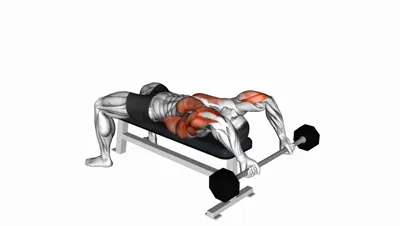
The dumbbell chest supported row locks your torso face-down against an inclined bench, removing all lower-back involvement so the lats, rhomboids and rear delts do the entire pulling job without any hip-hinge stabilization demand. Lying chest-down and rowing two dumbbells up toward your ribs lets you focus purely on squeezing your shoulder blades together, since the bench physically prevents any torso swing or momentum from assisting the lift. Because each arm still moves independently like a standard dumbbell row, it keeps the unilateral benefit while trading the core-stability challenge for a stricter, more isolated pulling stimulus.
How to perform
- Set the bench angle Set an adjustable bench to roughly a 30–45 degree incline and lie face-down against it with a dumbbell in each hand.
- Let the dumbbells hang Let your arms hang straight down from your shoulders with the dumbbells below the bench, palms facing each other or facing back.
- Set your chest against the pad Press your chest firmly into the bench and keep your forehead or chin in a neutral position, avoiding neck strain.
- Row both dumbbells up Pull your elbows back and up toward your hips, leading with your elbows rather than your hands, until the dumbbells reach your ribs.
- Squeeze your shoulder blades Pause briefly at the top with your shoulder blades pulled together, feeling the contraction across your entire upper back.
- Lower under control Lower the dumbbells back to a full stretch slowly, keeping your chest pressed against the bench throughout the set.
Tips
- Keep your chest pinned to the bench pad for the entire set — if it lifts off, you've lost the strict isolation that makes this variation valuable.
- Lead every rep with your elbows traveling up and back, not your hands — thinking about the elbows keeps the back muscles engaged instead of the biceps.
- Choose a bench angle you can maintain comfortably without neck strain — a slightly lower incline is often more comfortable for longer sets.
- Let each arm move through its own full range independently, especially useful for correcting any left-right strength imbalance in your back.
Common mistakes
- Letting the chest lift off the pad to help lift the weight — this defeats the entire purpose of the exercise, which is to remove momentum from the equation entirely.
- Rowing with straight arms and shrugged shoulders — this shifts work to the traps instead of the lats; drive your elbows back rather than shrugging up.
- Craning the neck up to look forward — this can strain the cervical spine over a long set; keep your head in a neutral position in line with your torso.
- Using a weight too heavy to control the eccentric — dropping the dumbbells back down quickly skips the lengthened-tension stimulus that drives back hypertrophy.
Recommended sets & reps
| Sets | Reps | RIR | |
|---|---|---|---|
| Strength | 3–4 | 6–8 | 1–2 |
| Hypertrophy | 2–3 | 8–12 | 1–2 |
| Endurance | 2–3 | 12–15 | 2–3 |
| Power | 3 | 6–8 | 2–3 |
These ranges are working sets only — add 1–2 progressive warm-up sets before each working set. Pair with 2× per week frequency to reach ~10–20 weekly sets per muscle group, the volume range supported by current evidence (Schoenfeld 2017, Pelland 2025).
Benefits
Builds back thickness with a strict, momentum-free pulling stimulus since the chest support physically removes any ability to swing the torso or use the hips to assist the lift. Isolates the lats, rhomboids and rear delts more directly than a standing bent-over row by eliminating the lower-back stabilization demand entirely. Retains the independent, unilateral arm movement of a standard dumbbell row, still allowing you to correct side-to-side strength imbalances while training in a stricter position. A strong option for lifters managing lower-back fatigue or sensitivity who still want to train rowing volume heavy and hard.
Frequently asked questions
Chest supported row vs bent over dumbbell row — which is better?
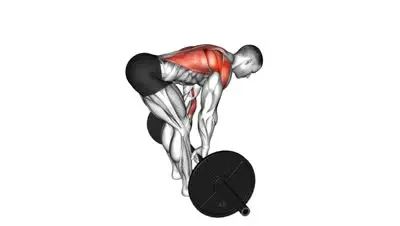
The chest supported version removes lower-back stabilization entirely, making it a safer, stricter choice when your lower back is fatigued or if you're prone to using momentum. The standing bent-over row builds additional hip-hinge and core strength that the supported version doesn't train.
What bench angle should I use for this row?
A 30–45 degree incline works well for most lifters — steep enough to support your chest fully but shallow enough to keep your arms hanging freely below the bench for a full range of motion.
Can I use a barbell instead of dumbbells for a chest supported row?
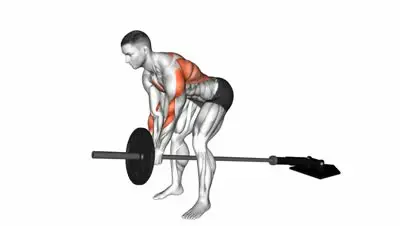
Yes, some gyms have dedicated chest-supported row machines or T-bar setups that work similarly, though dumbbells allow independent arm movement that a fixed bar or machine handle doesn't.
Why does my neck feel strained during this row?
This usually comes from craning your head up to look forward instead of keeping it in a neutral position in line with your spine. Rest your forehead lightly on the pad or look slightly downward to keep your neck relaxed.
Educational guidance only — not a substitute for in-person coaching. Train within your ability and use a spotter for heavy attempts.