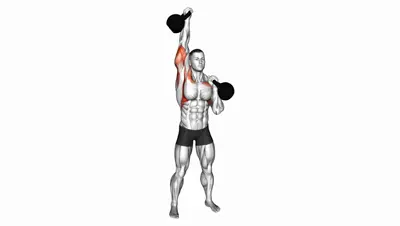
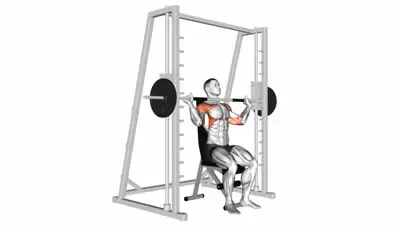
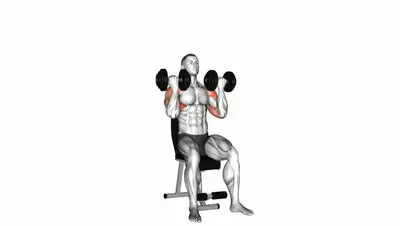
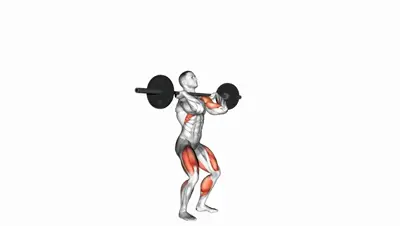
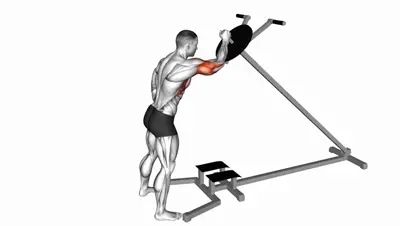
Description
The machine shoulder press guides the pressing motion along a fixed arc, letting you load the front and side deltoids heavily without the balance and stabilization demand of a barbell or dumbbell overhead press. Sitting with back support and pressing handles that travel a set path removes the core-bracing and shoulder-stability requirements of free-weight pressing, so you can push closer to true muscular failure with less technical risk. It's a dependable way to add heavy pressing volume on days when your lower back, core, or stabilizers are already fatigued from other lifts.
How to perform
- Set the seat height Adjust the seat so the handles sit level with your shoulders at the bottom of the range, with your back flat against the pad.
- Grip the handles Take hold of both handles with a firm grip, keeping your wrists stacked directly over your elbows rather than bent back.
- Brace your core and back Press your back firmly into the pad and brace your core before you begin pressing, keeping your ribs down rather than flared.
- Press the handles overhead Push the handles up and slightly inward until your arms are extended, without shrugging your shoulders up toward your ears.
- Pause briefly at the top Hold for a moment at full extension without locking your elbows out aggressively, keeping tension in the deltoids.
- Lower under control Lower the handles back down slowly to the starting position, keeping your back against the pad the entire time.
Tips
- Keep your back flat against the pad throughout every rep — arching away from the pad shifts stress into your lower back and reduces shoulder tension.
- Press the handles slightly inward at the top rather than straight up if the machine allows — this keeps the front delts loaded through the full lockout.
- Don't shrug your shoulders toward your ears at any point in the press — this shifts work to the traps and away from the target deltoids.
- Use a full range from shoulder height to near-lockout for hypertrophy, or slightly shorter reps if you're specifically building lockout strength.
Common mistakes
- Arching the lower back off the pad to press more weight — this is the most common cheat on machine presses and shifts load away from the shoulders onto the spine.
- Flaring the elbows out wide at the bottom — this can place unnecessary stress on the shoulder joint; keep the forearms roughly vertical at the start.
- Locking the elbows out hard at the top — snapping into full lockout under heavy load stresses the joint; stop just short and control the position instead.
- Using a weight so heavy that the eccentric collapses — dropping the handles quickly on the way down skips the lengthened-tension stimulus for hypertrophy.
Recommended sets & reps
| Sets | Reps | RIR | |
|---|---|---|---|
| Strength | 3–4 | 6–8 | 1–2 |
| Hypertrophy | 2–3 | 8–12 | 1–2 |
| Endurance | 2–3 | 12–15 | 2–3 |
| Power | 3 | 4–6 | 1–2 |
These ranges are working sets only — add 1–2 progressive warm-up sets before each working set. Pair with 2× per week frequency to reach ~10–20 weekly sets per muscle group, the volume range supported by current evidence (Schoenfeld 2017, Pelland 2025).
Benefits
Builds pressing strength and shoulder size with a guided path that removes the balance demand of free-weight overhead pressing, letting you focus every rep purely on the deltoids and triceps. Allows you to train closer to true failure safely, since there's no risk of losing control of an unstable loaded bar overhead. Reduces lower-back strain compared to a standing barbell press, making it a strong option for lifters managing lower-back sensitivity or those who train shoulders on the same day as heavy squats or deadlifts. A dependable staple for accumulating pressing volume with minimal setup and low technical demand.
Frequently asked questions
Machine shoulder press vs barbell overhead press — which builds more shoulder size?
Both produce comparable deltoid hypertrophy when trained to similar effort, since muscle growth depends primarily on mechanical tension and proximity to failure rather than the stability demand of the exercise. The barbell version trains more core and stabilizer strength; the machine lets you isolate the shoulders more directly.
Is the machine shoulder press safe for shoulder injuries?
The fixed path can be gentler on the joint for some people since it removes uncontrolled movement, but if you have an existing shoulder injury, check with a physical therapist about your specific range of motion before loading it heavily.
Why does my lower back hurt during the machine press?
This almost always means you're arching off the back pad to move more weight. Reduce the load until your back stays flat against the pad for every rep.
Should I go all the way to lockout on the machine press?
A near-lockout with control is fine for most goals — snapping the elbows into hard lockout under heavy load adds unnecessary joint stress without extra hypertrophy benefit.
Educational guidance only — not a substitute for in-person coaching. Train within your ability and use a spotter for heavy attempts.