Description
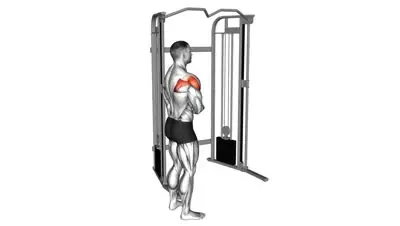
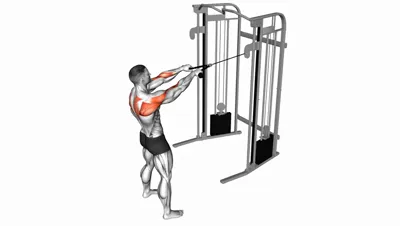
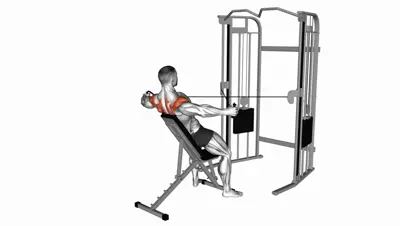
The cable rear delt fly isolates the posterior deltoids and mid-traps through a horizontal-abduction arc, using constant cable tension to keep the target muscles working through the entire range instead of just the hardest portion like a dumbbell version does. Standing and pulling two cables crossed in front of your body outward to your sides trains the rear delts in the exact plane that most pressing-heavy programs neglect, correcting the forward-rounded posture that comes from too much bench pressing and too little pulling. Because the load stays light and technical, it doubles as both a hypertrophy tool and a shoulder-health corrective.
How to perform
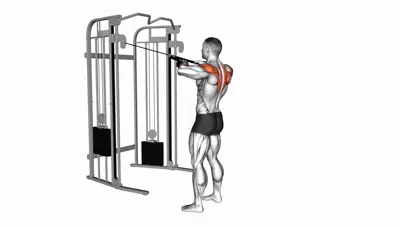
- Set both cables to chest height Set two cable pulleys to roughly chest height and grab the opposite handle with each hand, so the cables cross in front of your body.
- Stand tall with a slight lean Stand centered between the pulleys with a slight forward lean from the hips and a soft bend in your knees, arms extended in front of you.
- Set your shoulders before pulling Pull your shoulder blades down away from your ears and keep a slight, fixed bend in your elbows throughout the movement.
- Pull the handles out to your sides Lead with your elbows and pull both handles out and slightly back until your arms are roughly in line with your torso, squeezing your rear delts.
- Pause at the widest point Hold the contracted position for a moment, feeling the squeeze between your shoulder blades and rear delts before reversing.
- Return under control Let the handles travel back to the crossed starting position slowly, resisting the cable the whole way instead of letting it snap back.
Tips
- Keep a soft, fixed bend in your elbows for the entire set — locking them out turns the fly into a lat pulldown; bending them too much turns it into a row.
- Pull to shoulder height, not higher — going above your shoulders shifts the work to the traps and away from the rear delts.
- Use a light weight and focus on the squeeze rather than the total load moved — the rear delts respond best to control, not heavy weight.
- Cross the cables in front of your body rather than pulling from the same-side pulley — the crossed setup keeps tension on the target muscle through the full arc.
Common mistakes
- Using too much weight and turning the fly into a row — if your elbows bend past a slight angle, biceps and lats take over from the rear delts.
- Standing too upright — a fully vertical torso lets gravity pull the resistance downward instead of across, reducing rear-delt tension; lean forward slightly from the hips.
- Shrugging the traps up during the pull — this steals the movement from the rear delts; keep your shoulders pulled down away from your ears throughout.
- Letting the cables snap back on the return — releasing control on the eccentric wastes half the training stimulus; resist the weight all the way home.
Recommended sets & reps
| Sets | Reps | RIR | |
|---|---|---|---|
| Strength | 3–4 | 10–12 | 1–2 |
| Hypertrophy | 3–4 | 12–15 | 1–2 |
| Endurance | 2–3 | 15–20 | 2–3 |
| Power | 3 | 10–12 | 2–3 |
These ranges are working sets only — add 1–2 progressive warm-up sets before each working set. Pair with 2× per week frequency to reach ~10–20 weekly sets per muscle group, the volume range supported by current evidence (Schoenfeld 2017, Pelland 2025).
Benefits
Corrects the rounded-shoulder posture that comes from too much pressing and not enough rear-delt work, one of the most common muscular imbalances in lifters who bench and overhead press frequently. Trains the posterior deltoids and mid-traps through a full range with constant cable tension, which is difficult to replicate with dumbbells since gravity only loads the top portion of the range. Improves shoulder joint health and stability by strengthening the external rotators and posterior capsule, reducing impingement risk during heavy pressing. A low-fatigue accessory that can be trained frequently — even multiple times per week — without interfering with your primary pressing or pulling days.
Frequently asked questions
How often should I train rear delts?
Because the load is light and the muscle recovers quickly, most lifters can train rear delts 2–3 times per week without issue, including as a finisher on both push and pull days.
Cable rear delt fly vs dumbbell reverse fly — which is better?
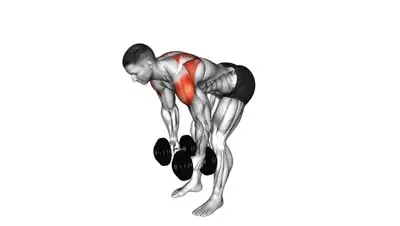
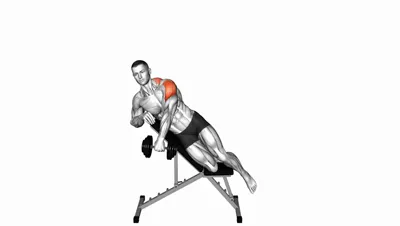
The cable version keeps constant tension through the entire range because the resistance comes from a horizontal pull rather than gravity, making it slightly more effective for full-range hypertrophy. The dumbbell version is a fine substitute if cables aren't available.
Why can't I feel this in my rear delts?
Most lifters use too much weight and swing the arms, which shifts the work to the traps and lats. Drop the load significantly and focus on pulling your elbows out and slightly back with a deliberate squeeze.
Should I bend my elbows during the rear delt fly?
A slight, fixed bend throughout the set is ideal. A dead-straight arm limits how far you can pull; too much bend turns the movement into a row that recruits your back muscles instead.
Educational guidance only — not a substitute for in-person coaching. Train within your ability and use a spotter for heavy attempts.