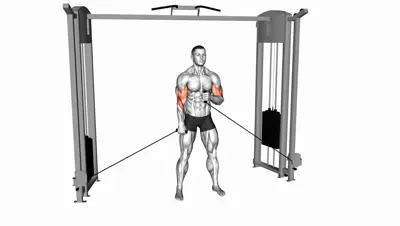
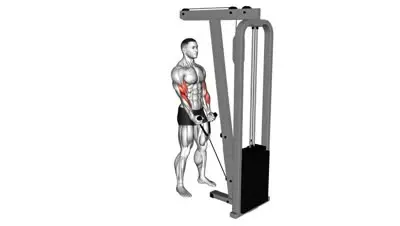
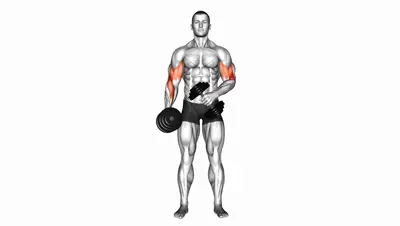
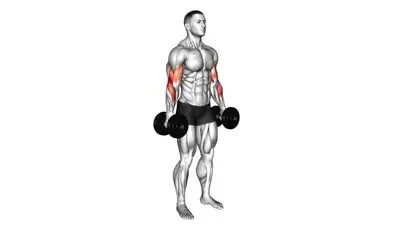
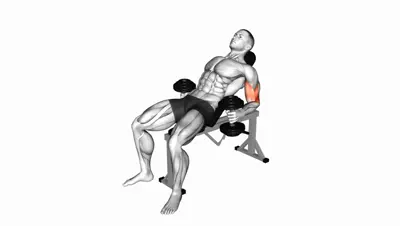
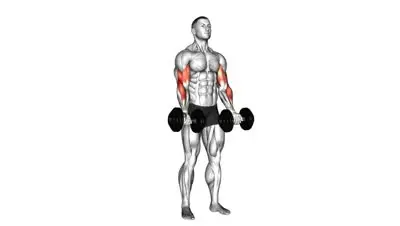
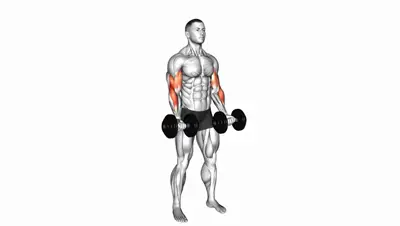
Description
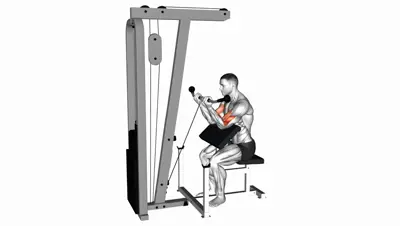
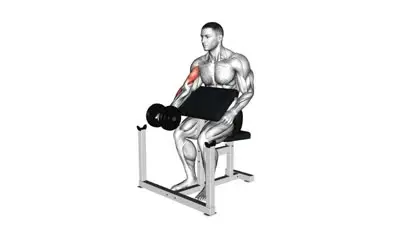
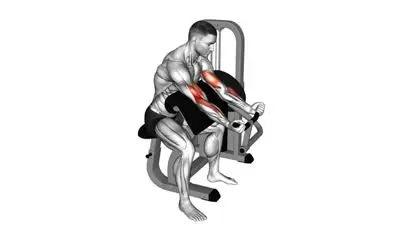
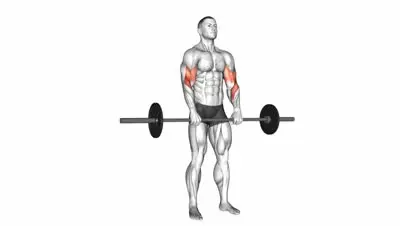
The barbell preacher curl locks your upper arms against an angled pad, removing all shoulder swing and momentum so the biceps do 100 percent of the lifting work through a strict, controlled range. Because the pad fixes your elbow position, you can load heavier weight than a strict dumbbell curl allows while still keeping the stretched-position tension that drives biceps growth — the bottom of the range, where the arm is nearly straight, is where the preacher curl is uniquely brutal. It is one of the most reliable ways to isolate the biceps with heavy load and zero cheating.
How to perform
- Set the pad height Sit or stand at the preacher bench and adjust the pad so your armpits rest just over the top edge, with your upper arms flat against the angled surface.
- Grip the bar shoulder-width Take a shoulder-width underhand grip on the barbell and let your arms extend fully so the bar hangs at the bottom of the pad.
- Curl without lifting your shoulders Curl the bar upward by flexing your elbows only, keeping your upper arms pinned to the pad and your shoulders relaxed down.
- Squeeze at the top Bring the bar as high as your wrists comfortably allow and squeeze your biceps hard for a moment at peak contraction.
- Lower fully under control Lower the bar slowly back to a near-full arm extension, resisting the weight the entire way rather than letting it drop.
- Reset before each rep Pause briefly at the bottom with your arms still pinned to the pad, then begin the next rep from a dead stop.
Tips
- Never let the bar bounce off the bottom of the range — the stretched position under load is where the preacher curl earns its reputation, so control it fully.
- Keep your upper arms glued to the pad from the first rep to the last — lifting your elbows off the pad turns this back into a standing curl.
- Use a slightly narrower or wider grip across sessions to shift emphasis between the long and short heads of the biceps.
- Don't chase full lockout at the top of every rep — many lifters find biceps tension drops off in the last few degrees, so stop just short if that's true for you.
Common mistakes
- Lifting the elbows off the pad mid-set — this converts a strict isolation exercise into a momentum-assisted curl and defeats the entire purpose of the movement.
- Using too much weight to complete the bottom stretch — bouncing out of the fully extended position risks the biceps tendon; drop the load if you can't control the bottom.
- Rushing through the eccentric — dropping the bar quickly on the way down skips the lengthened-tension stimulus that makes the preacher curl so effective for growth.
- Curling with a full grip squeeze instead of relaxed hands — over-gripping recruits the forearms and pulls focus away from the biceps; hold the bar loosely enough to still control it.
Recommended sets & reps
| Sets | Reps | RIR | |
|---|---|---|---|
| Strength | 3–4 | 6–8 | 1–2 |
| Hypertrophy | 3–4 | 8–12 | 1–2 |
| Endurance | 2–3 | 12–15 | 2–3 |
| Power | 3 | 6–8 | 2–3 |
These ranges are working sets only — add 1–2 progressive warm-up sets before each working set. Pair with 2× per week frequency to reach ~10–20 weekly sets per muscle group, the volume range supported by current evidence (Schoenfeld 2017, Pelland 2025).
Benefits
Builds biceps size and peak with a level of strict isolation that few other curl variations can match, because the pad physically removes shoulder swing and momentum from the equation. Loads the stretched, near-straight-arm position with real tension, which is one of the strongest known drivers of biceps hypertrophy and a range most standing curls under-train. Allows heavier absolute loading than a dumbbell preacher curl because the barbell distributes weight symmetrically across both arms, making it a strong strength-building variation as well as a hypertrophy tool. A staple accessory for building a complete biceps that looks as good flexed as it does relaxed.
Frequently asked questions
Why does the barbell preacher curl feel so much harder than a standing curl at the same weight?
The angled pad removes your ability to use shoulder swing or lean-back momentum, so the biceps handle the entire load unassisted. Expect to use noticeably less weight than a standing curl at the same rep range.
Barbell preacher curl vs dumbbell preacher curl — which should I choose?
The barbell version lets you load more total weight and trains both arms together, ideal for building raw strength. The dumbbell version allows independent, unilateral work and can correct side-to-side imbalances — many lifters benefit from rotating between the two.
Why does my elbow hurt during preacher curls?
Bouncing out of the fully stretched bottom position under heavy load places sudden stress on the biceps tendon at the elbow. Slow the eccentric down and avoid using momentum to start each rep.
How much weight should I use for preacher curls?
Start noticeably lighter than your standing curl weight — most lifters need 20–30 percent less load to maintain full control through the entire range on the preacher bench.
Educational guidance only — not a substitute for in-person coaching. Train within your ability and use a spotter for heavy attempts.